
Study Guide to Practice Test
Study guide to practice test: upload the study guide your professor posted and get an exam-style practice test written from it.
Knowing it and answering it are different skills.
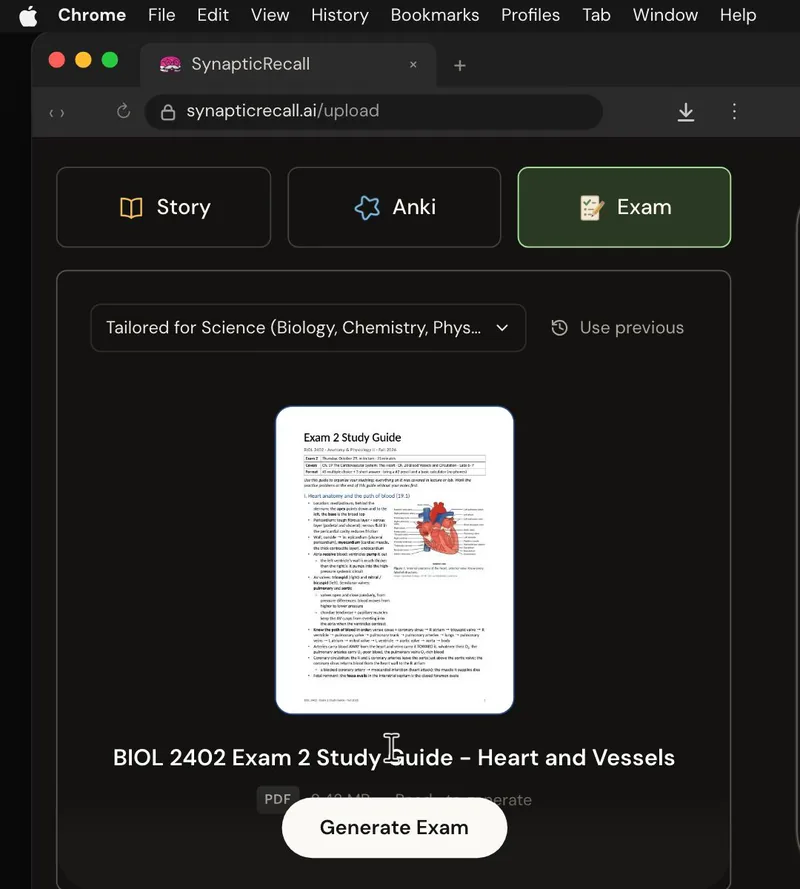
- The A&P study guide “BIOL 2402 Exam 2 Study Guide - Heart and Vessels.pdf” is dragged from Chrome’s downloads onto Synaptic Recall’s upload page, with only Exam selected.
- The study guide uploads and Dr. Synapse starts writing practice questions, counting them as they are written.
- The practice exam is ready: 10 questions from the study guide, with an Open Exam button.
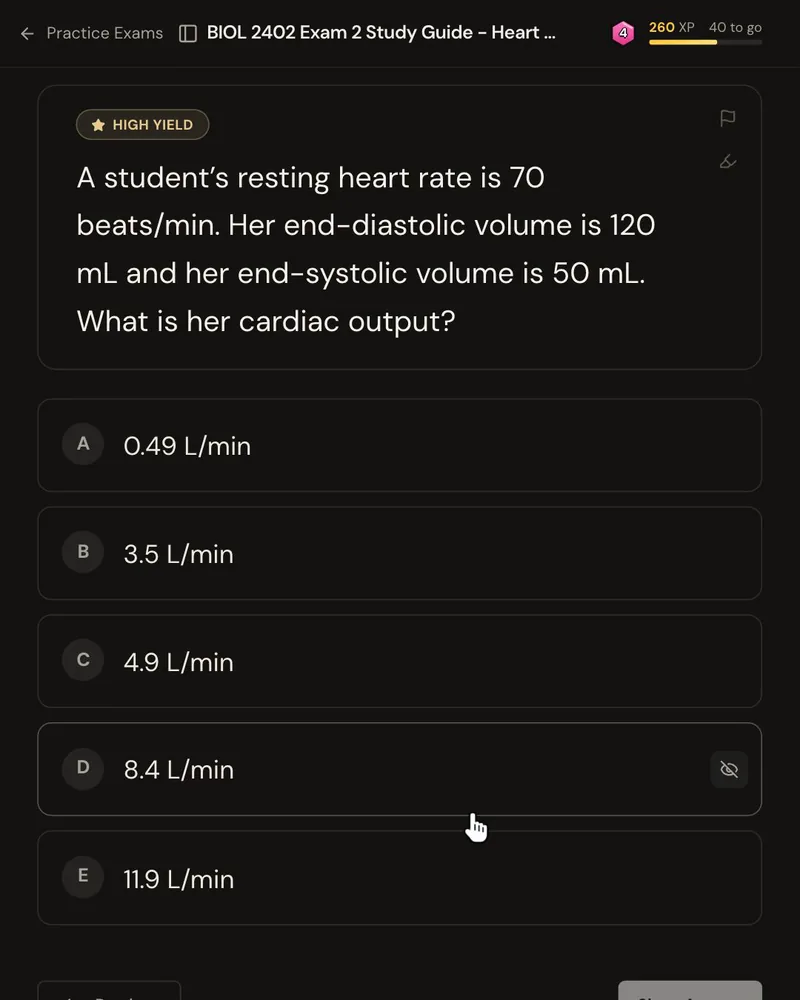
- A question from the exam: “A student’s resting heart rate is 70 beats/min. Her end-diastolic volume is 120 mL and her end-systolic volume is 50 mL. What is her…”
- An answer is chosen and Show Answer marks it: C, “4.9 L/min”, is correct.
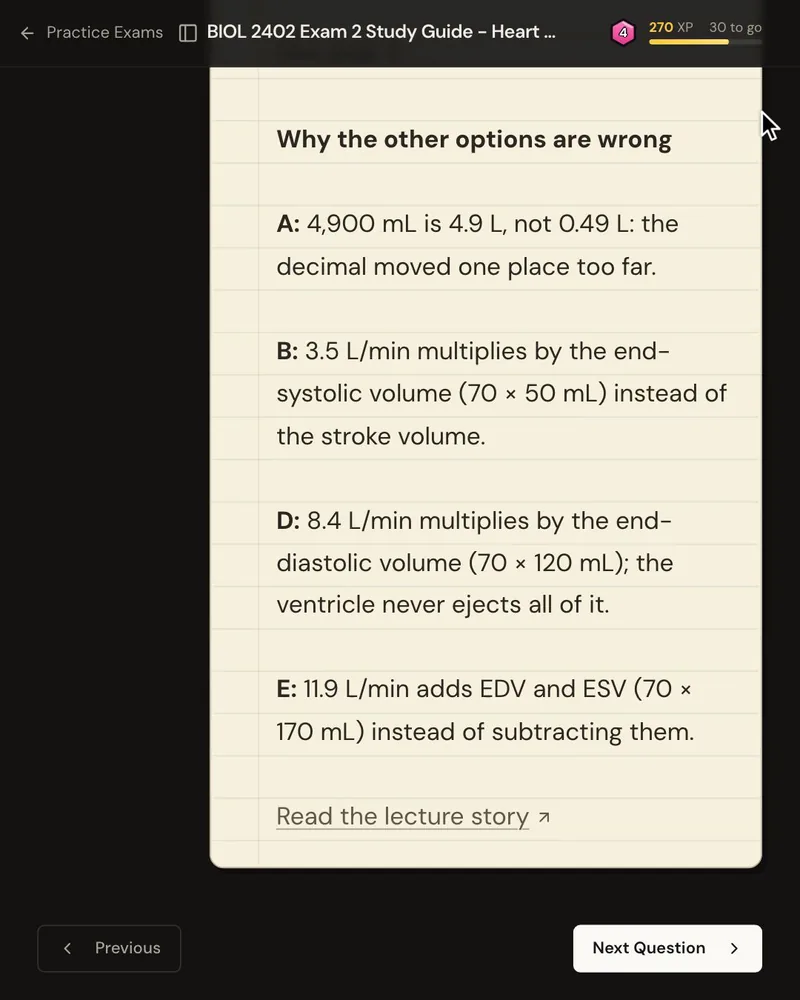
- The explanation opens with the study guide page the question came from, and why each other option is wrong.
- End card: “Quiz yourself on the study guide”, an Upload now button, and “3 free credits · no card needed”.
A six-page study guide, a week until Exam 2
Rereading the study guide until it feels familiar doesn’t count: with the answers in front of you, you never practice bringing them to mind on your own.
Every question comes with an explanation and an image of the exact page it came from.
Every option explained
The explanation names the correct answer, then why each wrong option is wrong.
The slide it came from is on every question, so you know exactly where the information is.
Only what your course expects you to know
Question banks are good, but they’re built for everyone.
These questions come from your own lecture, focused on what’s most likely to show up on your exam.
How it works
Upload one lecture as a PDF or PowerPoint.
The system is three simple steps you do for every one of your lectures:
- Understand the why behind the information: the Story
- Memorize with active recall: the Anki deck
- Apply it to real exam questions: the practice exam
Free to try
New accounts start with three free credits, and no card is needed.
Three credits cover one lecture with all three study modes.
Try it on your next lecture.